Why does salt raise blood pressure?
On this page
- The people whose blood pressure doesn’t rise with age
- How does salt raise blood pressure?
- Is it the kidneys or the arteries?
- How much does cutting salt lower blood pressure?
- Is a low salt diet dangerous?
- Where does the salt in your food come from?
- Who should not cut salt on their own?
- How to test your own salt sensitivity
- How much salt a day?
Salt makes your body hold water. Extra fluid raises pressure in your arteries unless they relax and your kidneys clear it. Eating less salt lowers systolic pressure (the top number) about 5 mmHg if yours is high, and 1 to 3 if it’s normal.
You get that drop from eating about 4 g less salt a day, roughly three quarters of a teaspoon, and keeping it up for a month or more.
What we’d do
If your blood pressure is high, cut salt. It’s one of the best-proven things you can do, and it usually shows within a few weeks. Start with what you buy, since most salt comes from packaged food and restaurants, and don’t worry much about the shaker. Aim for under a teaspoon a day in total, which is about 2,300 mg of sodium. We wouldn’t chase the very low numbers, because nobody has shown that going much lower prevents more heart disease.
If your pressure is normal, cutting salt gets you a point or two. We’d put that effort into exercise and what you eat first.
If you remember three things
- Less salt lowers blood pressure in most people. The higher your pressure and the older you are, the more it falls.
- Most salt doesn’t come from the shaker. About 70 percent of the salt Americans eat is already in packaged and restaurant food.
- Some people shouldn’t cut salt on their own. If you have heart failure, kidney disease or postural tachycardia syndrome (POTS), or take a water pill, talk to your care team first.
The people whose blood pressure doesn’t rise with age
In a study published in 1975, three researchers collected a full day of urine from Yanomami men in the Amazon rainforest. It held almost no sodium, the part of salt that affects blood pressure. A day’s urine on a Western diet holds 100 to 200 times as much. The Yanomami add no salt to their food.
After the teenage years their blood pressure stopped rising, and it stayed flat through adult life, which you rarely see in cities.
In almost every other population pressure creeps up decade after decade, and we call that normal ageing. In 2018 a team measured 72 Yanomami and 83 of their neighbours, the Yekwana, who get some salt and processed food through trade. The Yekwana’s systolic pressure climbed about a quarter of a point (mmHg) a year. The Yanomami’s didn’t climb at all. By the age of 50 the gap was about 16 points.
Salt is only one of the differences. The Yanomami are also lean and active and eat no processed food, and the 2018 team didn’t measure salt in either group. A 1988 study of 52 places around the world found three other groups who ate very little salt, in Brazil, Papua New Guinea and Kenya. They too showed little or no rise with age.
In the 1990s a team led by an Australian scientist tested it directly in chimpanzees. They took 26 chimpanzees living on fruit and vegetables and slowly added salt to the food of half of them, up to amounts within the range people eat. Their blood pressure rose. When the salt stopped, it came all the way back down within six months. Some chimps rose a lot and some barely moved. It was a small study. But unlike the village studies, the researchers changed the salt themselves, so they could see what it caused.
Salt can raise blood pressure, and some animals react to it much more than others. The reason starts with how your body handles salt.
How does salt raise blood pressure?
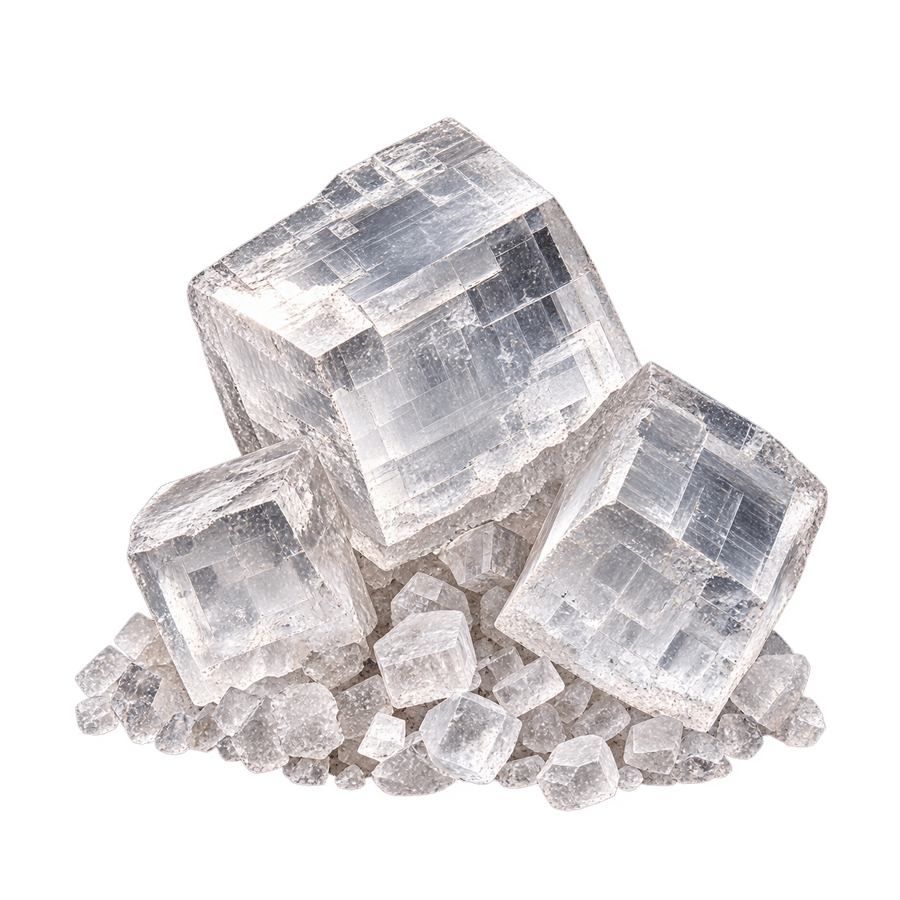
- Your body guards how salty your blood is. It keeps that number inside a narrow band.
- When salt comes in, your body holds back water to match it. More salt in the body means more fluid in the body.
- More fluid means the heart moves a little more blood each minute. The pipes are a closed loop, so the extra has to go somewhere.
- In many people the body absorbs most of this. Within about a day the arteries relax and make room. Over the next few days the kidneys pass the extra salt out, and pressure moves only a little.
- In others one of those two steps is slow. The arteries stay tight, or the kidneys need a higher pressure before they let the salt go. Pressure rises more, and stays up for as long as the salt keeps coming.
How far your pressure moves with salt is called salt sensitivity. It runs on a scale, and there’s no fixed point where someone becomes salt sensitive. By the usual tests about three in ten healthy people count as salt sensitive. In one long-running US study, about half of people with high blood pressure did. It’s more common with age, with kidney disease and with diabetes.
Is it the kidneys or the arteries?
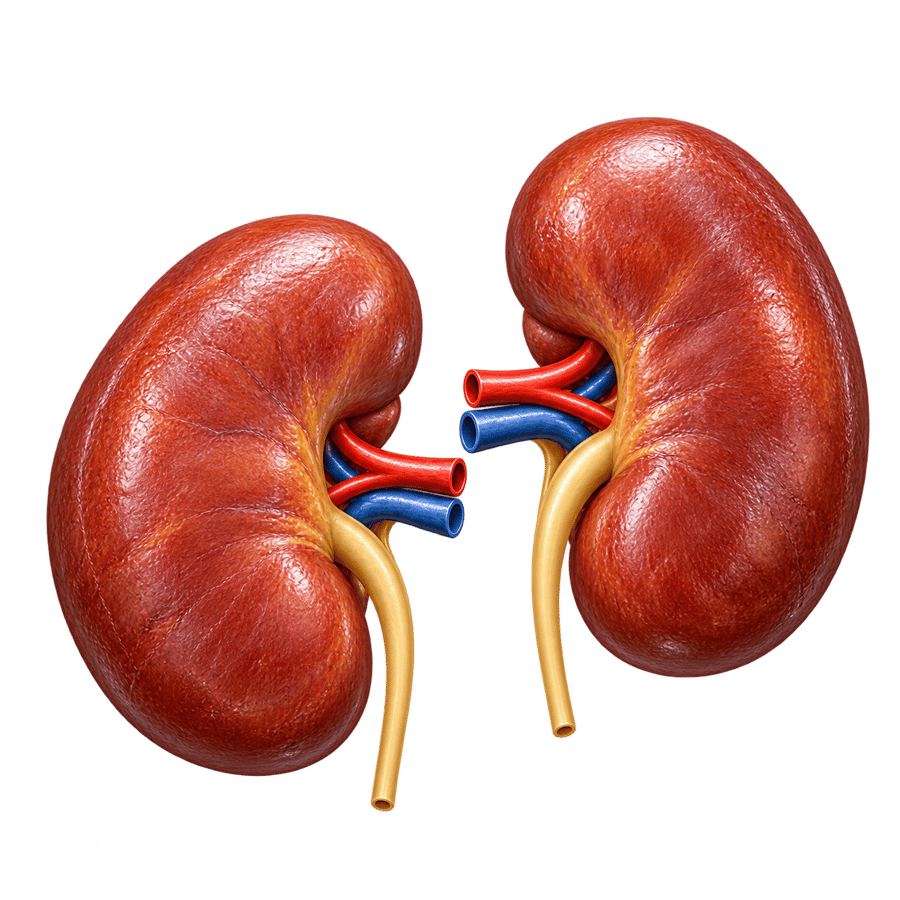
Scientists agree that salt raises blood pressure in some people. They disagree about whether it starts in the kidneys or in the arteries.
The kidneys first. Some scientists follow Arthur Guyton, who studied how the body controls blood pressure, and think it’s always the kidney. Some kidneys only let salt go at a higher pressure, so the body’s pressure rises until they do. In the 1960s Lewis Dahl bred rats whose blood pressure shot up on salt, and rats whose pressure didn’t. In the 1970s he swapped their kidneys. The blood pressure followed the kidney. In 1983 six people whose high blood pressure had destroyed their kidneys were given kidneys from donors with normal pressure. About four and a half years later all six had normal pressure. It’s an interesting result, but it was only six people.
The arteries first. Others think everyone holds on to the same salt and water at first, and the difference is whether the arteries relax. They point to later rat experiments where the trait didn’t follow the kidney. In one small study, 14 healthy adults whose pressure didn’t change on a very high salt diet still had arteries that widened less well after seven days of it. Salt reached their artery walls even though their pressure held steady. But we can’t tell from that study whether the artery wall is what’s different in people who are salt sensitive.
In 2016 both sides published their cases side by side in the same journal. The authors of a 2024 review found that the kidney mechanism has been shown directly in animals, but they knew of no study that measured it directly in people.
The body can store salt. Between 2007 and 2011 about a dozen healthy men were sealed into a mock spacecraft in Moscow for a simulated mission to Mars. Every meal was fixed and every drop of urine was collected, so researchers could track salt for months.
The men ate the same amount every day, but the salt leaving their bodies rose and fell on a rhythm of about a week. The total inside them swung up and down, and their weight didn’t change. Their bodies were storing sodium without the extra water you’d expect to come with it. Other work by the same team suggests it goes into skin and muscle. Surprisingly, when the men’s salt was doubled, they drank less water over the following weeks.
We don’t know yet if this stored salt raises blood pressure. But it means the body does a lot more with salt than keep it in the blood.
How much does cutting salt lower blood pressure?
Strong We’re confident that eating less salt lowers blood pressure. Moderate The evidence that it prevents heart disease and stroke is good, but thinner, and it only holds when you count them as one group. Unknown Nobody knows yet whether going very low prevents more of them than going moderately low.
The US National Academies came to the same conclusions in 2019. They rated the blood pressure evidence high, and the evidence on cardiovascular events (heart attacks, strokes and other heart events as a group) moderate. For heart attacks or strokes on their own, they found the evidence low or not enough to say.
Every meal provided, three salt levels
412 adults with pressure of 120/80 or above, 30 days at each level. DASH-Sodium, NEJM, 2001
On an ordinary American diet, moving from the high salt level to the middle one took 2.1 mmHg off systolic pressure. Moving from the middle to the low took off another 4.6.
All food was supplied, and these figures are from the half of the group on the ordinary diet.
One week high, one week low
213 adults aged 50 to 75. CARDIA-SSBP, JAMA, 2023
The middle systolic number was 126 on the high salt week and 119 on the low one. Pressure fell in 73 percent of people. The size of the drop was about the same whether or not they had high blood pressure or took medication.
The low week was about 500 mg of sodium, far below what anyone eats by accident. On their usual food people were at 125, about the same as the high week.
34 longer trials, pooled
3,230 people, four weeks or more. He, Li and MacGregor, BMJ, 2013
Eating about 4.4 g less salt a day lowered systolic pressure by 4.2 mmHg, with 5.4 in people with high blood pressure and 2.4 in people without.
These were modest cuts kept up for four weeks or more, so it’s the closest number to what most people can expect.
Does it prevent heart disease?
3,126 adults with slightly raised pressure, followed 10 to 15 years. Trials of Hypertension Prevention, BMJ, 2007
People who had been coached to cut salt for 18 months to 4 years went on to have 25 percent fewer cardiovascular events, a count that includes heart attacks, strokes and procedures to open arteries.
There were only 200 events, so the result was only just beyond chance. A quarter of people were lost to follow-up, and deaths weren’t clearly lower.
In the pooled trials, the bigger the cut, the bigger the fall. Across 133 trials (Huang and colleagues, BMJ, 2020), every 1,150 mg less sodium a day, about half a teaspoon of salt, took about 1 mmHg off systolic pressure, and about 2 in the trials that ran longer than two weeks. It also takes time. For the same cut, trials of two weeks or less found about half the effect of longer ones, so eating less for a few days won’t tell you much.
Is a low salt diet dangerous?
Scientists have argued about this for a long time. A 1998 feature in the journal Science called it one of the “most vitriolic, and surreal disputes in all of medicine”.
The sceptic says
Low salt may be dangerous. A study of 101,945 people in 17 countries estimated each person’s sodium from one urine sample. It found the lowest risk of death and heart events between about 3 and 6 g of sodium a day, with more risk below and above. The average American eats about 3.4 g of sodium, which is inside that range, so by this study they’d gain little from cutting.
If your pressure is normal, the gain is tiny. One large review puts it at about 1 point in white people with normal pressure. It also found that big cuts raise stress hormones and nudge cholesterol up.
Plenty of people don’t respond. In the one week trial above, about a quarter didn’t fall. In one study of 84 healthy adults with normal pressure, average age 37, about 1 in 10 had clearly lower pressure on a week of high salt.
Cutting salt didn’t help in heart failure. In 806 people with heart failure, advice to eat under 1,500 mg of sodium a day didn’t reduce deaths, hospital stays or emergency visits over a year.
The reply
That study guessed salt from one urine sample. Another study took three to seven full day collections from each of 2,974 people, aged 30 to 54, and followed them for 24 years. Measured with those full collections, more salt went with more deaths in a straight line. When the researchers ran the same people through the guessing formulas, they got a J shaped curve like the one the big study found. People who are already ill also tend to eat less, which by itself can make low salt look dangerous. The Mars study also found the salt leaving the body swings over about a week, so one day of urine is a poor guide to what someone eats.
The 1 point is the smallest figure in that review. In the same review Black people with normal pressure fell about 4 points. Many of its trials were short, and short trials make the effect look smaller. Modest, longer cuts show a much smaller hormone change and no clear change in cholesterol.
That’s true. Some people react to salt a lot and some barely at all, so it’s useful to test it on yourself. In that study the people whose pressure fell on salt were also more likely to develop high blood pressure later, so it doesn’t mean salt is harmless for them.
People with heart failure are a separate case. Most of those patients only got down to about 1,650 mg, so few people in that trial were ever on very low salt. If you have heart failure, follow your care team rather than general advice.
Very few people in the carefully measured studies ate very little salt, so they can’t tell us much about the very low end, and that’s the part people argue about.
The trial that would settle it hasn’t been done. It would put thousands of ordinary people on low or moderate salt for years and count heart attacks and deaths. Until someone runs that trial, the advice to go from moderate to very low salt is worked out from other studies, since nothing has tested it directly.
In 2016 Trinquart and colleagues mapped 269 reports on salt, heart disease and death, and two thirds of them were comments, letters and reviews. They found a strong split, with 54 percent supporting cutting salt and 33 percent opposing it. A report was about one and a half times more likely to cite work that agreed with it.
If your blood pressure is raised, cutting salt is one of the better proven things you can do, and the drop is big enough to matter. If it’s normal, the gain is small. Nobody has shown yet whether going very low is better than going moderately low.

Where does the salt in your food come from?
When researchers followed 450 adults in three American cities and weighed the salt they added themselves, the shaker at the table accounted for about 5 percent of their sodium. Cooking at home added about 6 percent. About 71 percent had been put in by a factory or a restaurant before they bought the food. That’s the American pattern, and in China and much of East Asia most salt is still added at home.
In the newest US survey the biggest sources are everyday meals, and not only the foods that taste salty. Deli meat sandwiches come first, then pizza, savoury snacks and soup, then poultry dishes, pasta dishes, bread and cheese. Those eight groups supply about a third of the total.
Since most salt comes in food you buy, that’s where you can cut the most.
- Check the label. In the US, 5 percent of the Daily Value or less per serving is low. 20 percent or more is high.
- Know the words. “Low sodium” means 140 mg or less per serving. “Reduced sodium” only means a quarter less than the original, which can still be a lot.
- Give it time. Young adults who kept to a lower salt diet for five months came to prefer their food less salty.
- Consider a potassium salt. Across 19 trials that measured blood pressure, it lowered systolic pressure by about 4.6 points. In 20,995 people in rural China who had had a stroke, or were over 60 with high blood pressure, it cut strokes by 14 percent over about five years. Those trials were mostly in places where salt is added at home, so you can expect less where most of it comes in bought food. Don’t use one if you have kidney disease or take medication that raises potassium, unless a doctor agrees.
Potassium also changes how much salt raises your pressure. In one small study, salt raised blood pressure far more when potassium in the diet was low, and less when it was raised.
Who should not cut salt on their own?
- Heart failure. Follow your care team’s plan.
- Kidney disease. Salt and potassium both need a doctor’s guidance.
- A water pill or other blood pressure medication. Agree any change first, and never stop a medicine on your own.
- Postural tachycardia syndrome (POTS). With POTS too little blood reaches the head when you stand up, and salt holds fluid in the body. A 2015 statement from heart rhythm specialists says 10 to 12 g of salt a day may be considered, which is the opposite of cutting salt.
- Pregnancy. Follow your care team.
How to test your own salt sensitivity
You can find out roughly how salt sensitive you are. It takes about six weeks, and it’s a rough test that hasn’t been validated.
- Take a seven-day home week on your usual food. Drop the first day, which runs a few points high.
- Eat less salt for two weeks by cooking more and swapping out the big sources above. Measure during the second week.
- Go back to usual for a week, then do the two low weeks again.
- Compare the averages. Two home weeks can differ by a few points even when nothing has changed, so a single difference of a few points may be noise. If both low weeks come out lower, you can trust the result.
Cooking more changes other things too, such as how much potassium you eat, so this shows what eating that way does for you, which isn’t the same as what sodium alone does. The way you measure makes more difference than which cuff you use. See how to measure at home.
How much salt a day?
| Sodium a day | As salt | |
|---|---|---|
| World Health Organization limit | under 2,000 mg | under 5 g |
| US label Daily Value | under 2,300 mg | about 1 teaspoon |
| Average in the US | about 3,400 mg | about 8.5 g |
| Average worldwide, 2021 | 4,278 mg | about 11 g |
One gram of salt holds about 400 mg of sodium. US labels list sodium, and most recipes list salt.
41 sources
- Oliver, Cohen and Neel, Blood pressure, sodium intake, and sodium related hormones in the Yanomamo Indians, a no-salt culture, Circulation, 1975pubmed.ncbi.nlm.nih.gov
- Intersalt Cooperative Research Group, Intersalt: an international study of electrolyte excretion and blood pressure, BMJ, 1988pubmed.ncbi.nlm.nih.gov
- Mueller et al., Association of age with blood pressure across the lifespan in isolated Yanomami and Yekwana villages, JAMA Cardiology, 2018, as reported by Johns Hopkinssciencedaily.com
- Denton et al., The effect of increased salt intake on blood pressure of chimpanzees, Nature Medicine, 1995pubmed.ncbi.nlm.nih.gov
- Hall, Renal dysfunction, rather than nonrenal vascular dysfunction, mediates salt-induced hypertension, Circulation, 2016pmc.ncbi.nlm.nih.gov
- Morris et al., Vasodysfunction that involves renal vasodysfunction, not abnormally increased renal retention of sodium, accounts for the initiation of salt-induced hypertension, Circulation, 2016pmc.ncbi.nlm.nih.gov
- Bailey and Dhaun, Salt sensitivity: causes, consequences, and recent advances, Hypertension, 2024pmc.ncbi.nlm.nih.gov
- Dahl and Heine, Primary role of renal homografts in setting chronic blood pressure levels in rats, Circulation Research, 1975pubmed.ncbi.nlm.nih.gov
- Curtis et al., Remission of essential hypertension after renal transplantation, NEJM, 1983pubmed.ncbi.nlm.nih.gov
- DuPont et al., High dietary sodium intake impairs endothelium-dependent dilation in healthy salt-resistant humans, Journal of Hypertension, 2013pubmed.ncbi.nlm.nih.gov
- Rakova et al., Long-term space flight simulation reveals infradian rhythmicity in human sodium balance, Cell Metabolism, 2013, as reported by Vanderbiltnews.vumc.org
- Rakova et al., Increased salt consumption induces body water conservation and decreases fluid intake, Journal of Clinical Investigation, 2017pubmed.ncbi.nlm.nih.gov
- Sacks et al., DASH-Sodium trial, NEJM, 2001pubmed.ncbi.nlm.nih.gov
- Gupta et al., Effect of dietary sodium on blood pressure: a crossover trial (CARDIA-SSBP), JAMA, 2023pubmed.ncbi.nlm.nih.gov
- He, Li and MacGregor, Effect of longer term modest salt reduction on blood pressure, BMJ, 2013pubmed.ncbi.nlm.nih.gov
- Huang et al., Effect of dose and duration of reduction in dietary sodium on blood pressure levels, BMJ, 2020pubmed.ncbi.nlm.nih.gov
- Cook et al., Long term effects of dietary sodium reduction on cardiovascular disease outcomes (TOHP follow-up), BMJ, 2007pubmed.ncbi.nlm.nih.gov
- Neal et al., Effect of salt substitution on cardiovascular events and death (SSaSS), NEJM, 2021pubmed.ncbi.nlm.nih.gov
- National Academies, Dietary Reference Intakes for Sodium and Potassium, 2019nationalacademies.org
- Institute of Medicine, Sodium Intake in Populations: Assessment of Evidence, 2013nationalacademies.org
- O'Donnell et al., Urinary sodium and potassium excretion, mortality, and cardiovascular events (PURE), NEJM, 2014pubmed.ncbi.nlm.nih.gov
- Graudal, Hubeck-Graudal and Jurgens, Effects of low sodium diet versus high sodium diet on blood pressure, renin, aldosterone, catecholamines, cholesterol, and triglyceride, Cochrane Database of Systematic Reviews, 2020pubmed.ncbi.nlm.nih.gov
- Inverse salt sensitivity in normotensive adults: role of demographic factors, Journal of Hypertension, 2023pubmed.ncbi.nlm.nih.gov
- Ezekowitz et al., Reduction of dietary sodium to less than 100 mmol in heart failure (SODIUM-HF), Lancet, 2022pubmed.ncbi.nlm.nih.gov
- He et al., Errors in estimating usual sodium intake by the Kawasaki formula alter its relationship with mortality, Hypertension, 2019pubmed.ncbi.nlm.nih.gov
- Ma et al., 24-hour urinary sodium and potassium excretion and cardiovascular risk, NEJM, 2022pubmed.ncbi.nlm.nih.gov
- Trinquart, Johns and Galea, Why do we think we know what we know? A metaknowledge analysis of the salt controversy, International Journal of Epidemiology, 2016pubmed.ncbi.nlm.nih.gov
- Taubes, The (political) science of salt, Science, 1998nasw.org
- Sheldon et al., 2015 Heart Rhythm Society expert consensus statement on postural tachycardia syndrome, Heart Rhythm, 2015pmc.ncbi.nlm.nih.gov
- Harnack et al., Sources of sodium in US adults from 3 geographic regions, Circulation, 2017pubmed.ncbi.nlm.nih.gov
- Koyama et al., Top food contributors of sodium intake in US children and adults, Preventing Chronic Disease (CDC), 2026cdc.gov
- US Food and Drug Administration, Sodium in your dietfda.gov
- 21 CFR 101.61, Nutrient content claims for the sodium content of foodslaw.cornell.edu
- World Health Organization, Sodium reduction fact sheetwho.int
- Bertino, Beauchamp and Engelman, Long-term reduction in dietary sodium alters the taste of salt, American Journal of Clinical Nutrition, 1982pubmed.ncbi.nlm.nih.gov
- Yin et al., Effects of salt substitutes on clinical outcomes, Heart, 2022pubmed.ncbi.nlm.nih.gov
- Morris et al., Normotensive salt sensitivity: effects of race and dietary potassium, Hypertension, 1999pubmed.ncbi.nlm.nih.gov
- Kyriakoulis et al., Home blood pressure monitoring schedule, Hypertension Research, 2022pubmed.ncbi.nlm.nih.gov
- Oberleithner et al., Plasma sodium stiffens vascular endothelium and reduces nitric oxide release, PNAS, 2007pubmed.ncbi.nlm.nih.gov
- Kopp et al., 23Na magnetic resonance imaging-determined tissue sodium in healthy subjects and hypertensive patients, Hypertension, 2013pubmed.ncbi.nlm.nih.gov
- National Institute of Diabetes and Digestive and Kidney Diseases, Your kidneys and how they workniddk.nih.gov